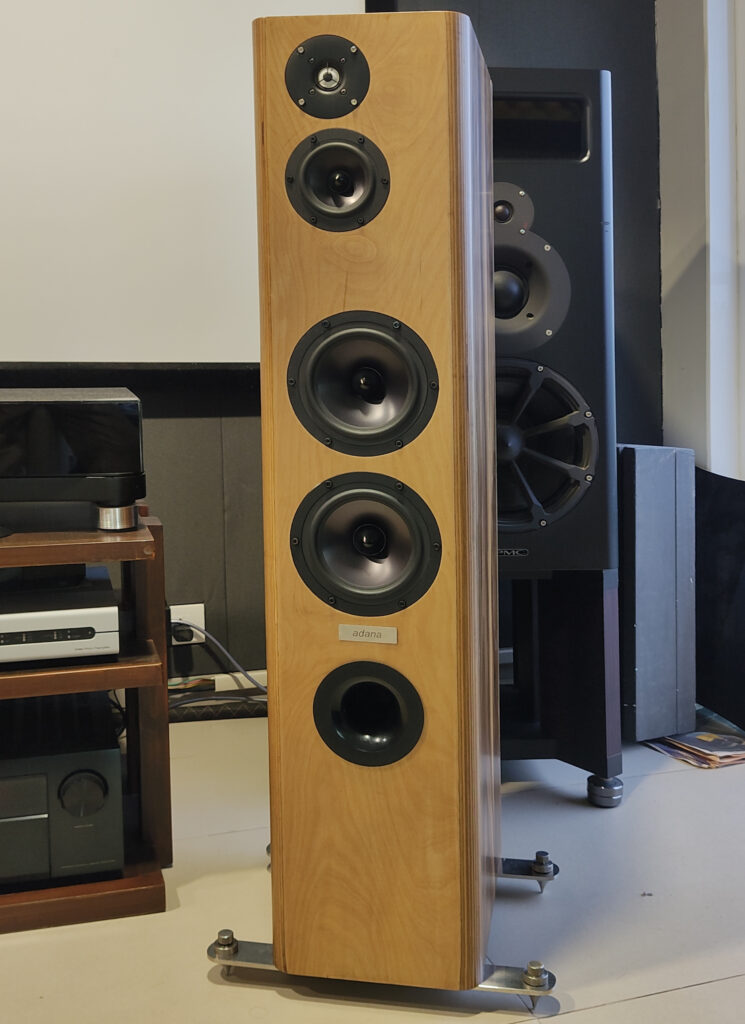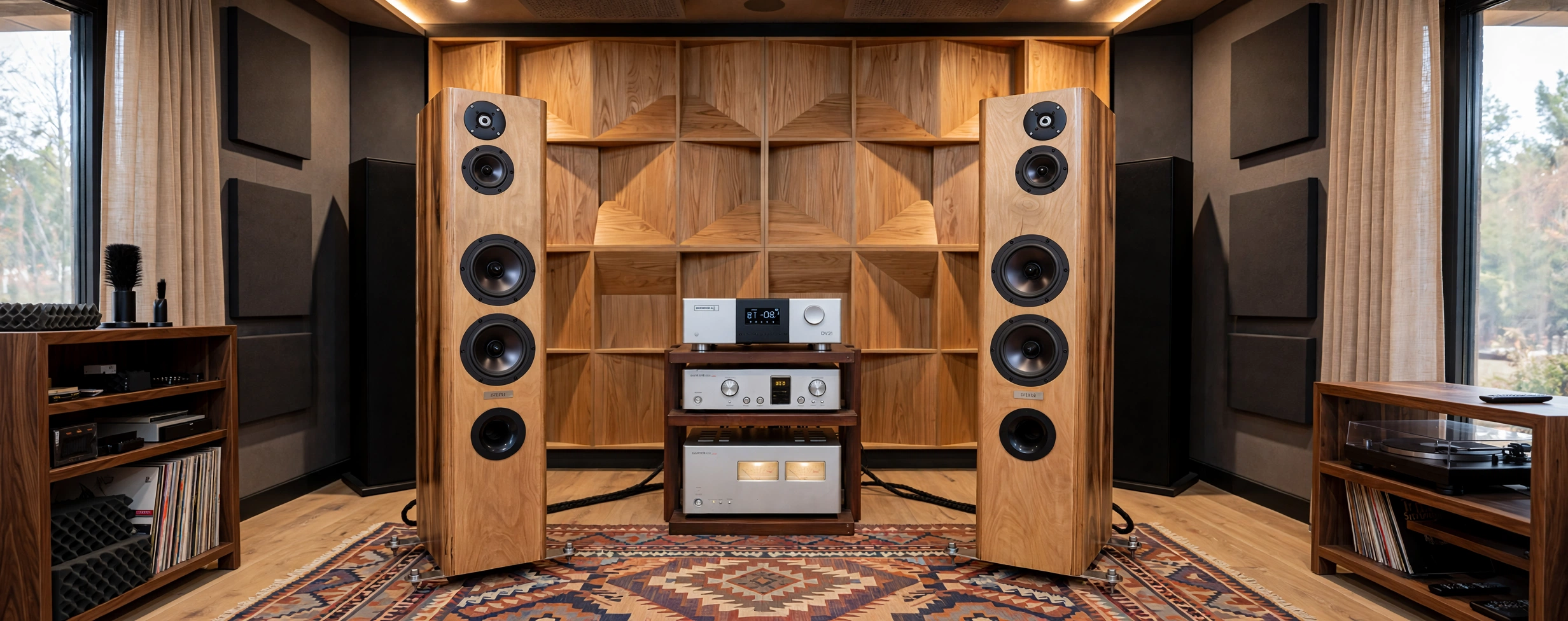
The Adana Mark II was a product of experimentation with the Adana. I had intended to make one pair, but a couple more friends wanted something similar, so I kicked off the project by getting two pairs of enclosures built.
Therefore, we now had two pairs of the Adana. It would have been my first case of making more than one pair of any of my designs. But while working on the crossover of the Adana, I began to get fresh ideas after building the first pair, and so I re-designed the crossover. So, I now had an Adana build and a Mark II build which differed purely in the crossover. Everything else remains absolutely unchanged.
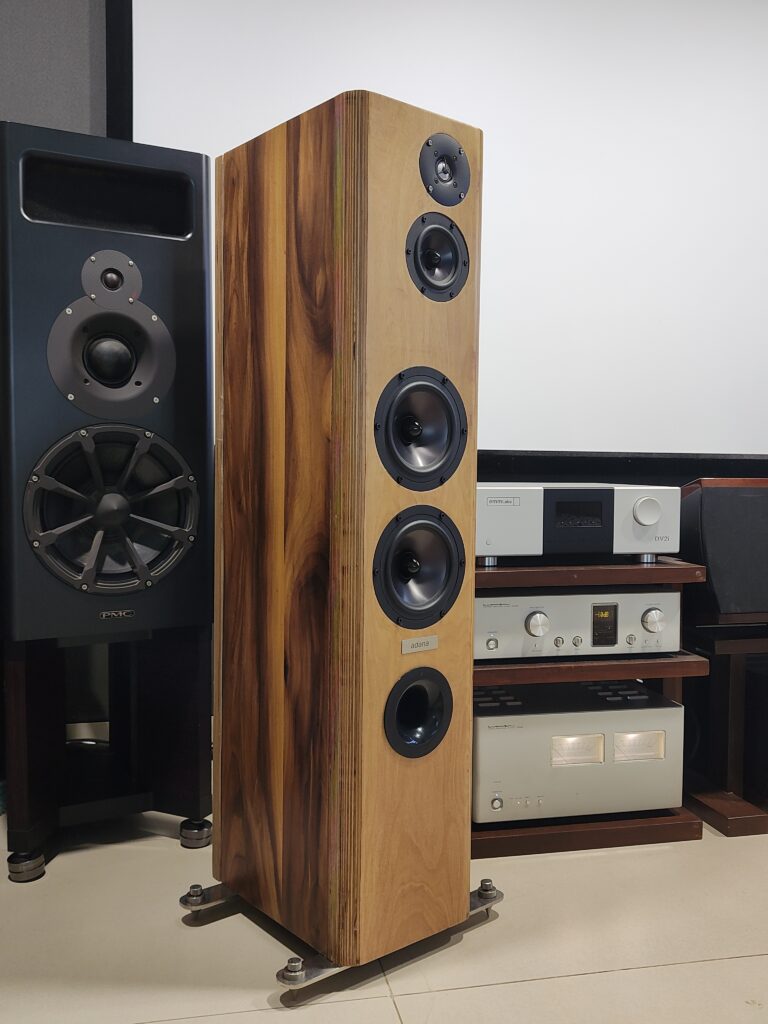
This, ladies and gentlemen, is the Adana Mark II.
Drivers
Refer to the page on the Adana.
The enclosure
Refer to the extremely detailed description of the enclosure of the Adana.
Measurements
No new measurements were taken. I used the datafiles of the Adana.
The crossover
The new crossover turned out like this:
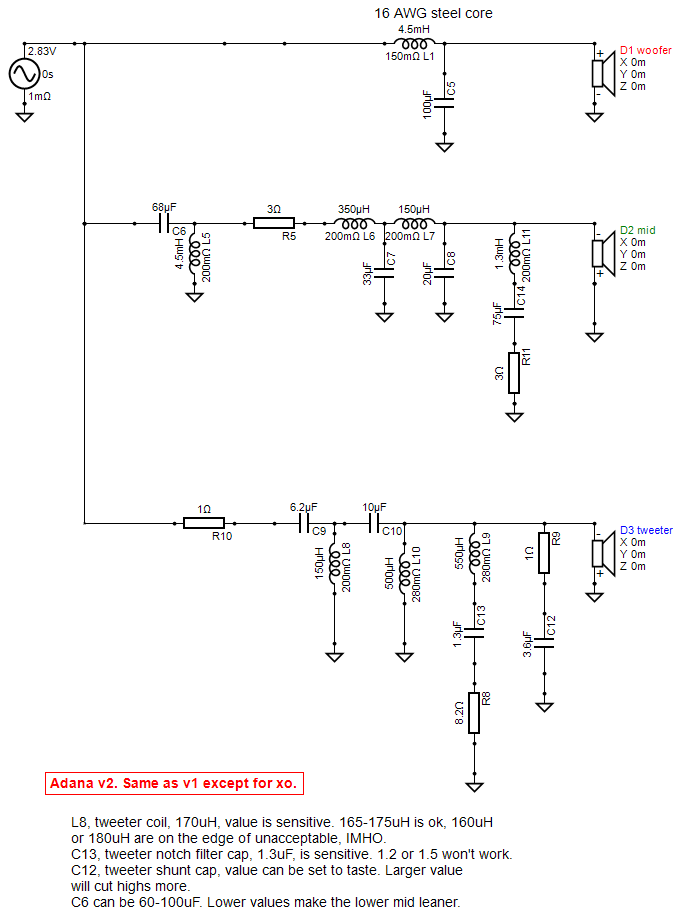
One can see the following changes:
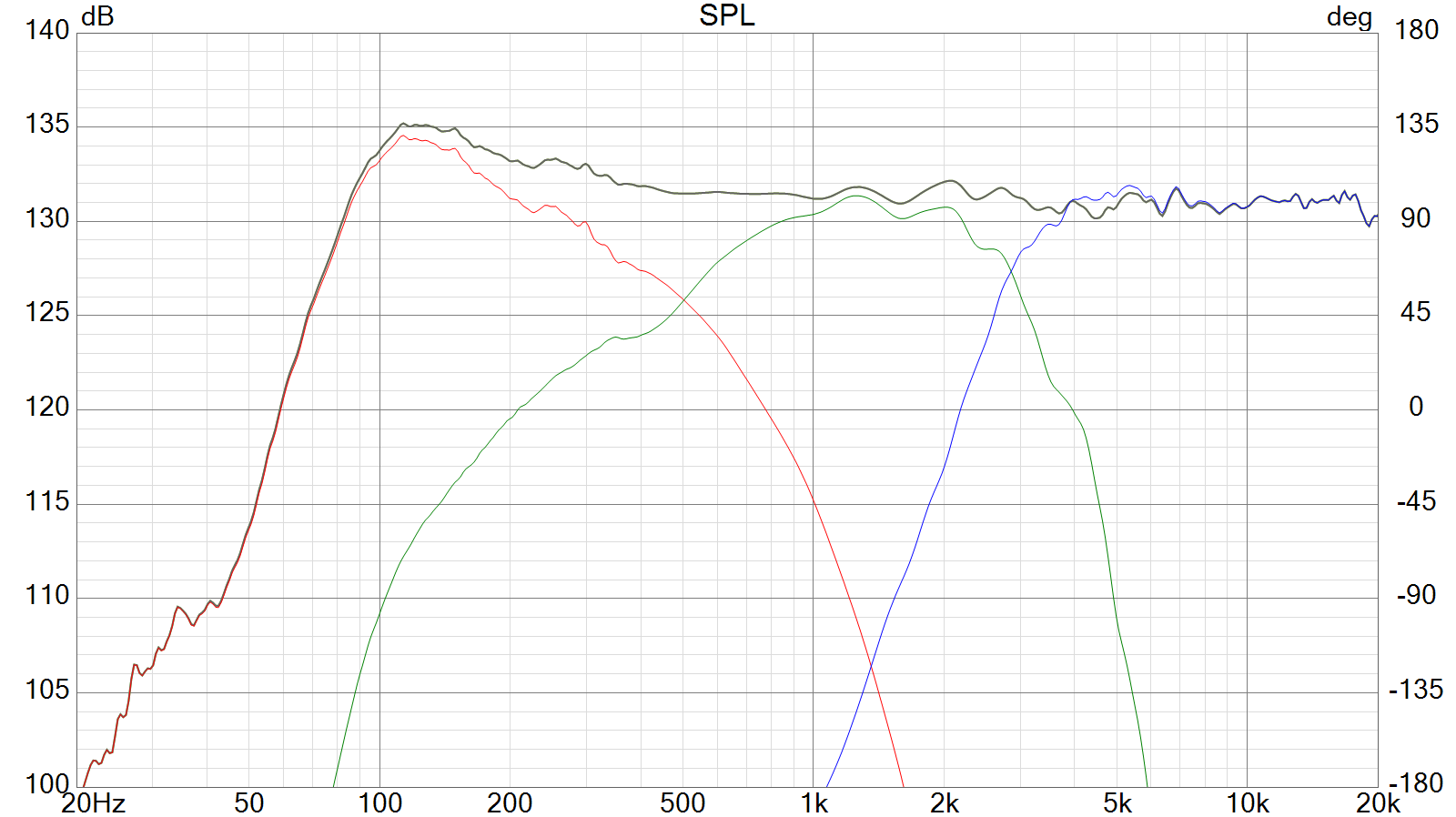
- The woofer’s LPF has an electrical second-order circuit now, whereas the Mark I had a fourth-order.
- The midrange to tweeter crossover had earlier been an electrical second order LPF and third order HPF, but now both were fourth order electrical.
- The notches are now using smaller inductors, though they’re hitting the same frequencies. The midrange inductor, L11, has moved from 3.3mH to 1.3mH. The tweeter notch inductor, L10, 1.8mH, has changed to L9, 550uH. Smaller inductors are always easier for the DIY builder to mess with.
- Because of the steeper slopes now possible on the LPF of the midrange, the cone breakup of the RS125 is now suppressed more effectively than in the Mark I. This will have a small impact on the texture of the upper mids. The earlier Adana midrange had a peak at about 7-9KHz, which was a pure cone breakup peak, and it was just 25dB lower than the baseline. The newer Adana has pushed it to more than 30dB, probably at least 35dB, below the baseline, so I expect the HF to be cleaner and more “delicate”.
The SPL from this crossover turns out to be:
And the impedance plot is now:
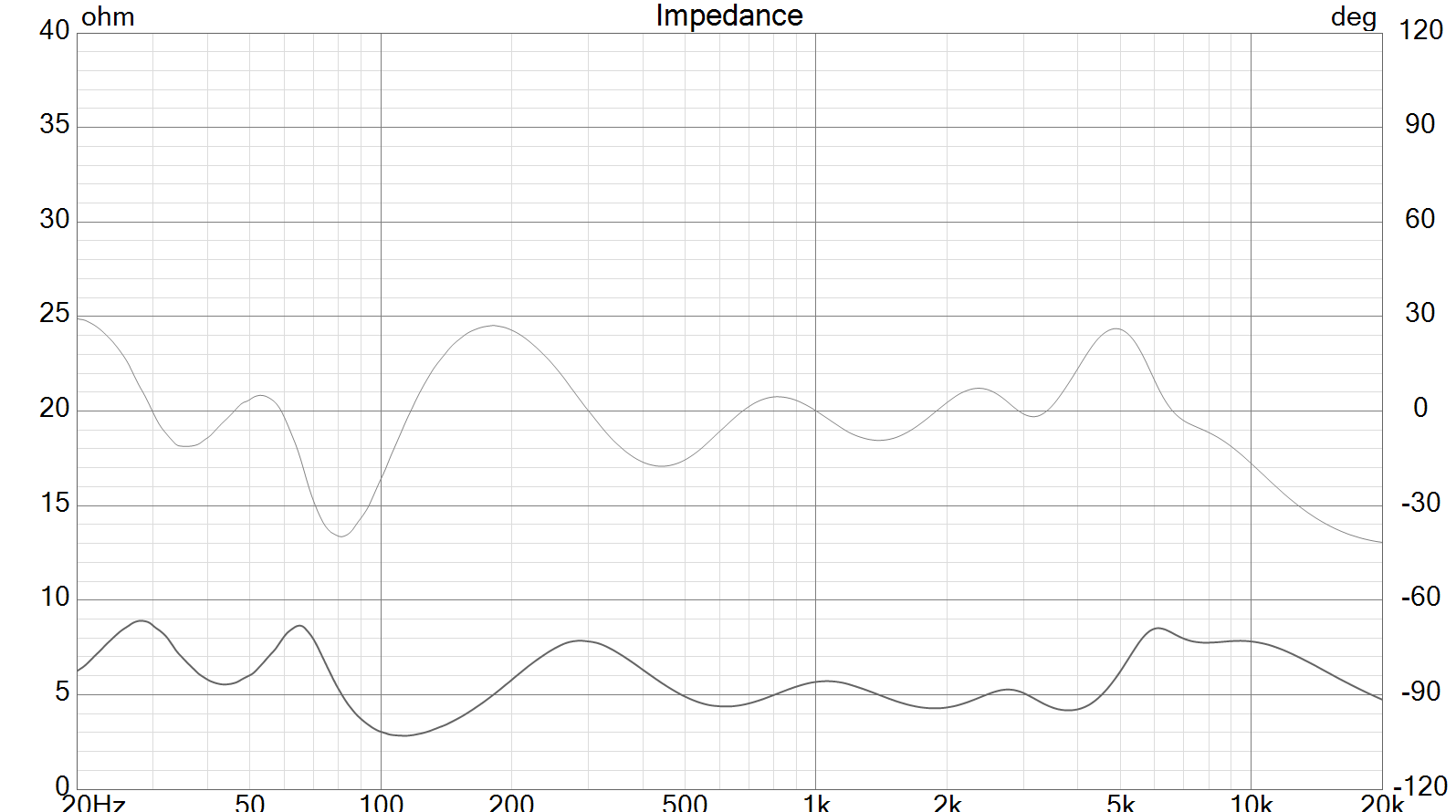
Therefore it continues to be as difficult a load to drive as Mark I, but the impedance peak between 5-10KHz is now much smaller, which is nice for some amplifiers.